Bluehost Review: An Honest Look at Shared Hosting
Founded in 2003, Bluehost has grown to become one of the largest and most well-known shared hosting providers on the web. Over the years, they have established themselves as a standard option for entry-level hosting.
In this review, I’ll take a look at their infrastructure, speed, security features, and pricing structure from a developer’s perspective, sharing my experiences with their platform.

Management and Interface
Bluehost utilizes a customized control panel built on top of cPanel. For developers, this provides a familiar interface to manage database credentials, configure domains, and check resource usage. They also provide a custom dashboard aimed at simplifying the setup process for standard sites.
While this works well for standard deployments, developers looking for advanced command-line tools or modern containerized deployments will find the shared hosting environment somewhat restrictive. The primary selling point of their entry-level plans remains simplicity and ease of setup rather than high-end configuration control.
Data Centers
Bluehost hosts its servers out of a major facility in Utah. This data center operates continuous monitoring, backup power systems, and redundant internet connections to ensure site uptime.

The facility spans over 50,000 square feet, housing thousands of servers. This large scale allows Bluehost to offer low entry prices, but it also means their shared hosting servers are densely packed. For simple projects, this infrastructure is more than sufficient, but high-traffic sites may occasionally experience resource limitations.
Performance and Speed
When evaluating a web host, server speed is a crucial metric. Shared hosting environments are notorious for variable performance depending on neighbor activity, but Bluehost manages this reasonably well for their price tier.
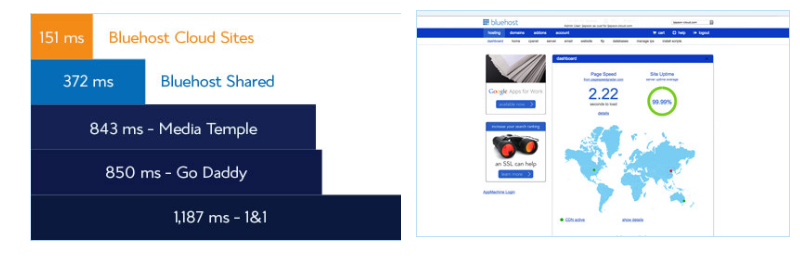
In my performance tests, the response times were steady for low-traffic sites. They offer standard caching solutions and CDN integration to help optimize load times. However, for applications with heavy database interactions or high concurrent traffic, you will likely hit the limitations of shared resources and need to look into their VPS or dedicated hosting options.
Security
Bluehost includes basic security measures out of the box, such as free SSL certificates and basic firewall protection. They also offer optional security add-ons like SiteLock for malware scanning and automated backups.

Their security portal allows you to quickly lock down directories or manage IP blocks to prevent unauthorized access. The underlying Linux servers are kept updated against core vulnerabilities.

For developers, having a stable environment that automatically mitigates basic brute-force attacks and intrusion attempts is a welcome feature, especially when managing multiple client sites or small hobby projects.
Pricing and Value
Bluehost’s pricing structure is divided into several tiers, ranging from basic shared hosting to dedicated servers.

The basic shared plans are very affordable during the initial signup period, though the renewal rates are significantly higher. Their dedicated hosting packages provide Xeon-based servers with dedicated RAM and storage, starting at a reasonable rate for users who need isolated resources.
For developers and hobbyists looking to host simple personal projects or portfolios, their entry-level plans offer decent value, provided you are aware of the renewal pricing.